A little egret photographed in England
by Stephen Hewitt | Published
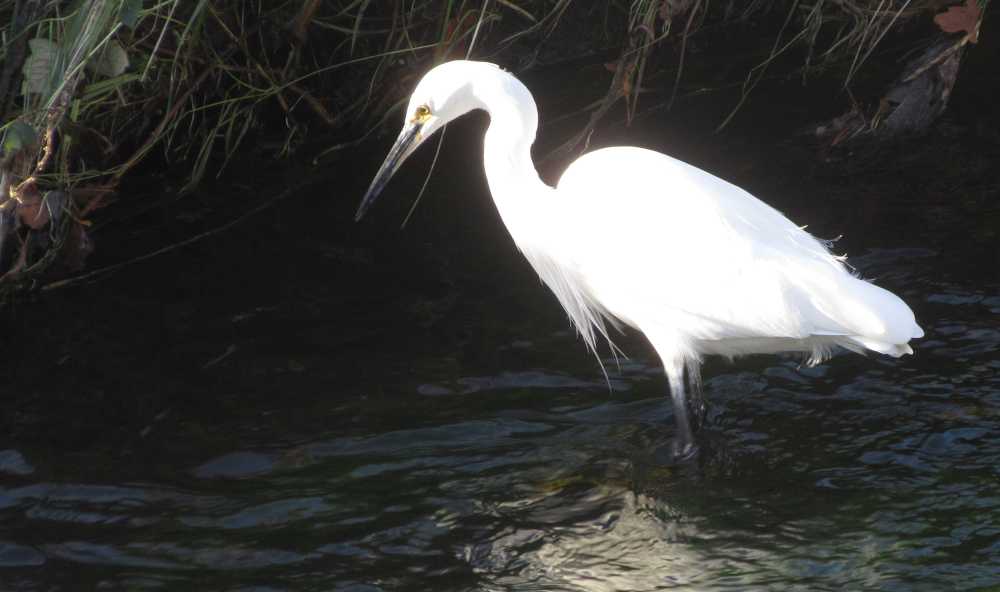
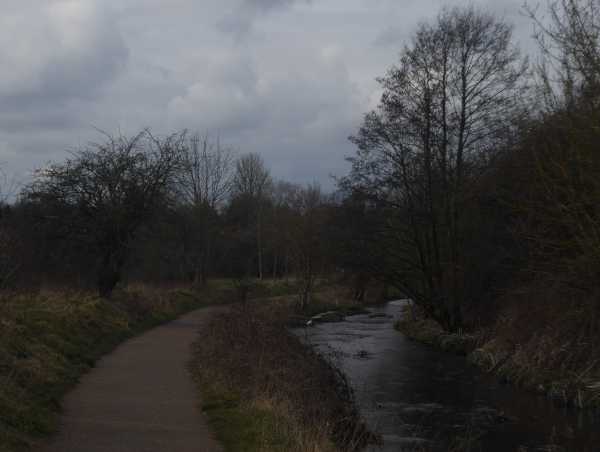
The photographs here show a little egret (Egretta garzetta) by a shallow stream in the suburbs of Birmingham, England. It looks like a small white heron.
Figure 1 shows it hunting in the water. When it lifted a foot above the surface, it was conspicuous in its bright orange colour, in contrast to its black legs. According to the guide books (eg [1]) this, in addition to its size, distinguishes it from the the great white egret, which has black feet.
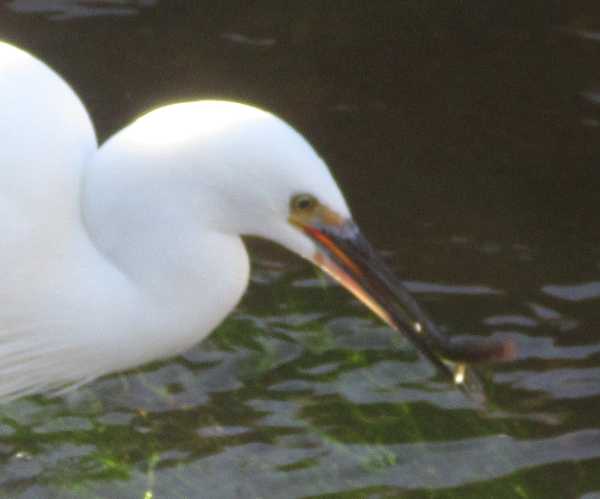
This bird seemed to be scraping its feet on the bottom of the stream, apparently to flush out its prey. At least once it also seemed to be vibrating a leg, but the most common action was to scrape its leg backwards, without itself moving forwards. Then, suddenly, it would plunge its beak into the water and grab something. Figure 2 shows an example of this, the object in its beak that it has just withdrawn from the water is presumably a small fish, but the photograph is not sharp enough to be sure.
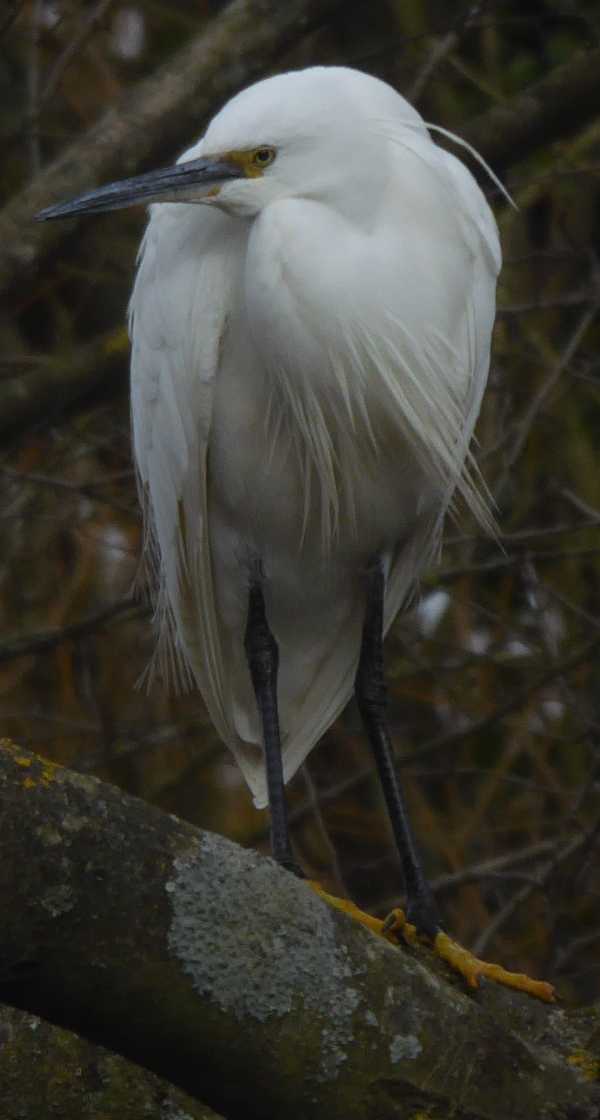
Figure 3 shows a little egret with visible yellow feet, perched in a tree on the bank of the same stream, photographed in 2018, about a mile downstream.
These birds are not common in England, much less common than the more usual heron, and to my knowledge I have only ever seen them along this stream. A guide book first published in English in 1994, reprinted in 2010, says “In Britain: Jan-Dec: scarce visitor, increasing.” [1]
References
- [1]
-
Birds of Britain and Europe, J, Nicolai, D. Singer, K. Wothe, originally published in German in Munich, translated and adapted by Ian Dawson, ISBN-13 978 0 26 167402 8, Harper Collins.